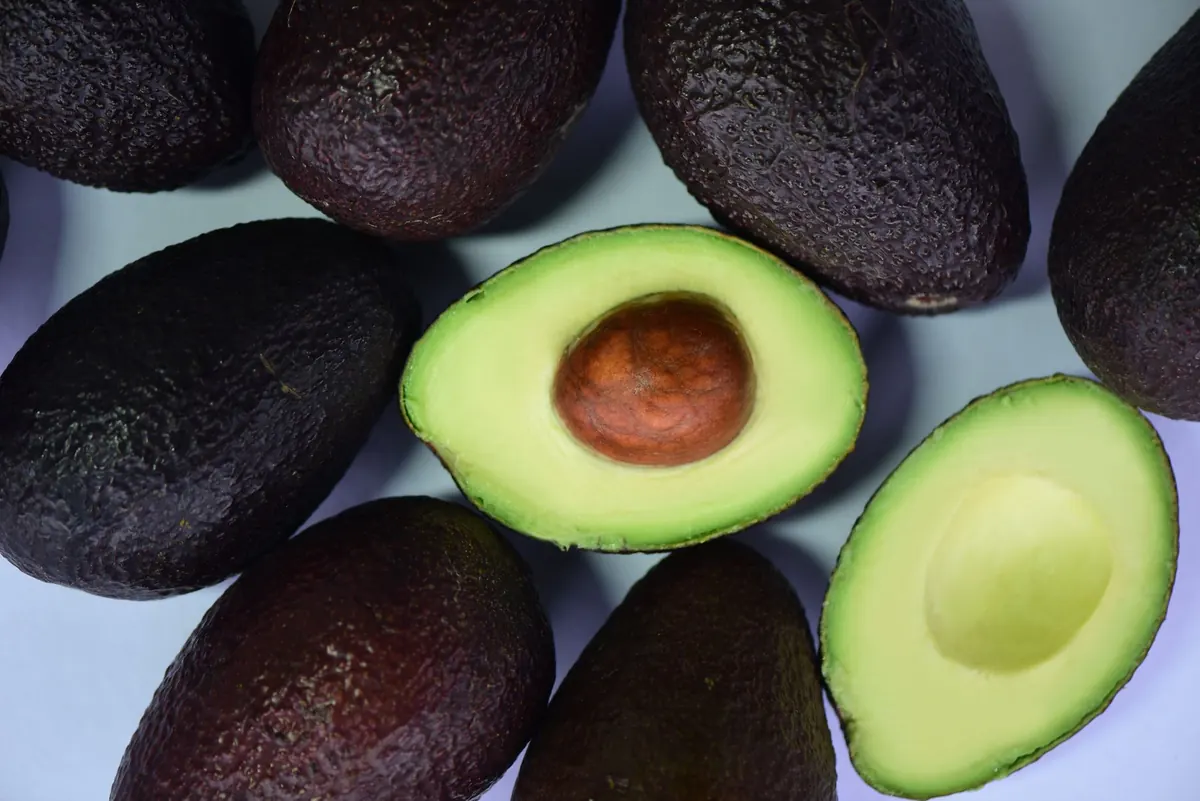
You buy four avocados on Saturday, firm and green, with a plan. On Tuesday they are still hard enough to chip a tooth. On Wednesday you cut one open and find brown streaks through flesh that was perfect twelve hours earlier. Nothing in your kitchen changed. Avocados are simply like that.
The reason is worth knowing, because it turns a guessing game into something you can manage. An avocado ripens from the inside out, releases its own ripening gas, and sits in its sweet spot for a maddeningly short time. Once you can read the stages, you will know when to leave one on the worktop, when to move it to the fridge, and when to stop waiting and start mashing.
Why avocados flip from hard to brown so fast
Avocados are climacteric fruit, which means they carry on ripening after they are picked rather than stopping at the moment of harvest. The fruit produces ethylene gas, and that gas sets off its own enzymes: starches turn to sugars, pectin breaks down, and the flesh softens. The gap between "nearly there" and "past it" is often a single day, which is why your avocado seems to change while you are at work.
Two things catch people out. First, the flesh near the stone softens before the outer flesh does, so an avocado can feel reasonably firm in your hand while the middle is already giving way. Second, skin colour is a poor guide unless you know your varieties. Hass goes from green to almost black as it ripens, but the green-skinned types sold in British shops — Fuerte, Ettinger and similar — stay green the whole way through. Judging by colour alone will let you down.
The five stages, and what to do at each
Think of ripening as five stages rather than a yes-or-no question.
- Rock hard. No give at all, even at the stem end. Leave it on the worktop and check daily.
- Firm with a hint of give. You can feel the slightest softness at the top. You are two or three days away, sometimes less in a warm kitchen.
- Gives gently when cradled. This is the one. Use it today, or move it to the fridge to buy yourself a couple of days.
- Soft all over. Dents stay when you press. Stop planning salads. This is mashing, guacamole or blending territory.
- Mushy and sunken. The skin looks hollow and the fruit feels light. Cut it and check before you decide anything.
Two tests that beat a fingertip squeeze
The stem test
At the top of the fruit there is a small dried cap, sometimes called the button. Flick it off with a thumbnail. If it comes away easily and the flesh underneath is green, the avocado is ripe and ready. If it resists, the fruit needs more time. If it comes away to reveal brown flesh, it has gone over. Do this just before you plan to eat it, because removing the cap leaves a small opening where mould can start.
The palm test
Cradle the avocado in your whole palm and squeeze gently, rather than prodding with fingertips. Fingertips bruise the flesh in one spot, and those bruises are the brown patches you find later. A gentle palm squeeze tells you how the fruit feels overall without leaving marks.
Leave it out while it is still firm
A hard avocado belongs at room temperature, out of direct sunlight, and preferably somewhere you will see it. A bowl on the worktop is ideal. Whole avocados do not need a paper bag to ripen, but if you want to hurry things along, put one in a paper bag with a banana or an apple. Both release ethylene, and the bag traps it around the fruit. Check every morning, because a bag can shave a day or more off the wait.
What you should not do is refrigerate a hard avocado. Cold stalls the ripening process, and fruit that spends too long in low temperatures can develop the brown streaks and stringy texture that ruin an otherwise good avocado. It then comes out of the fridge hard, sits on the side going nowhere, and seems to skip straight from unripe to unusable.
Move it to the fridge once it gives
As soon as an avocado passes the palm test, the fridge becomes your friend. A whole ripe avocado will hold in the salad drawer for two to three days, sometimes a little longer. Take it out half an hour before eating, since cold dulls the flavour, and it will taste noticeably better than one eaten straight from the shelf.
For a cut avocado, the rules change. Press cling film directly onto the exposed flesh rather than over the top of the bowl, add a squeeze of lime or lemon, and use it within a day or two. The brown layer that forms on the surface is oxidation, not spoilage — scrape it off with a knife and the green flesh underneath is fine. Leaving the stone in does far less than most people believe; it is the cling film touching the flesh that does the work.
An unripe avocado is a plan. A ripe avocado is a deadline. Buy them at different stages and you will always have one that is ready.
Speeding things up, slowing things down
- To ripen faster: paper bag, one banana, room temperature, check twice a day.
- To hold a ripe one: fridge, salad drawer, two to three days.
- To hold several: scoop the flesh, mash with lime juice, freeze in small bags and use from frozen in dressings or guacamole.
- Do not bother with: warm ovens, microwaves or bowls of water. Heat does not ripen an avocado evenly — it cooks the outside while the middle stays hard.
When it has gone too far
Brown streaks through the flesh and a stringy texture usually mean the fruit was chilled for too long or stored well past its best. Small bruised patches can simply be cut away. But if the flesh smells musty, sour or faintly fizzy, or you can see any mould, bin it. If you are unsure whether it is safe to eat, throw it away; no avocado is worth the risk.
A soft but clean avocado is still useful, and often better than a firm one for certain jobs. It makes richer guacamole, blends into a smooth salad dressing or cold soup, and can replace some of the butter in a chocolate cake or brownie batter. Overripe is only a problem when it tips into spoiled.
A simple routine that ends the guesswork
Buy your avocados at different stages — one that gives slightly today, one that is firm, one that is rock hard. Eat them in that order, and replace each one as you go. Keep them on the worktop until they yield to a palm squeeze, then move them to the fridge, and use the stem test on the day you plan to eat. That is the whole system, and it takes about ten seconds a day.
The hard-to-brown transformation is not a flaw in your shopping or your storage. It is what avocados do. Get ahead of it by buying in stages, and you will stop throwing away the ones you forgot about.