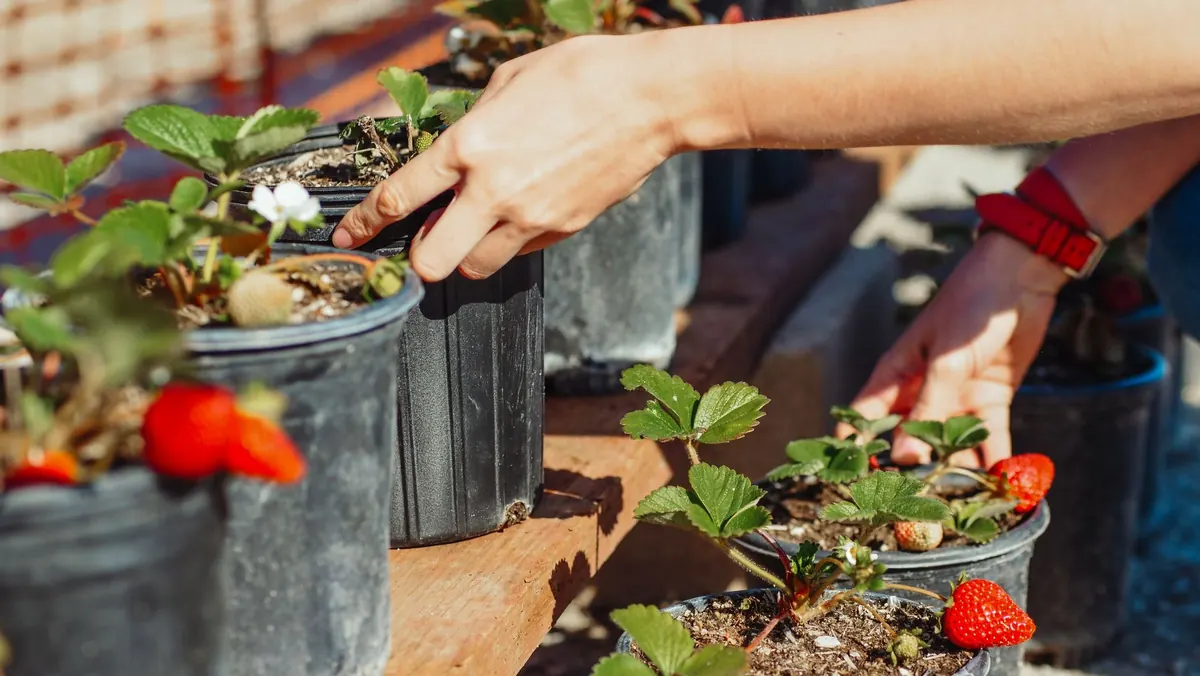
There is no better test of a strawberry than eating it warm, straight from the plant, with the sun still on it. Shop-bought fruit is picked early so it travels; yours can be left until it is deep red and genuinely sweet. That is the whole point of growing your own, and it is easier than most people expect.
The usual disappointment is a glut in late June followed by nothing at all. Strawberries do not have to behave like that. With a mix of varieties and a handful of well-timed jobs, a modest UK plot can produce fruit from late May into October.
Choose varieties from all three groups
Strawberries fall into three loose categories, and understanding them is the single most useful thing you can do for a long harvest.
- Summer-fruiting (June-bearers): one heavy crop over three or four weeks in June and early July. Reliable, flavoursome and ideal for jam. Cambridge Favourite, Honeoye and Elsanta are well-tested choices.
- Everbearers (remontant): smaller flushes from midsummer into September, sometimes later. Flamenco, Albion and Everest are worth trying. They are less sweet on average but keep going when the June crop has finished.
- Alpines and wild types: tiny, intensely flavoured berries from late June until the first hard frost. Alexandria and Ruegen are the classic ones, and they are happy in pots or along a path edge.
Plant at least one summer variety and one everbearer. Add alpines if you have a spare corner, and the picking season stretches from early summer to the first cold snap.
When and where to plant
Bare-root runners are best planted in late summer or early autumn, from mid-August to the end of September. They settle in before winter and give a proper crop the following year. Potted plants can go in during spring, but expect a lighter first season. Avoid planting in the heat of midsummer.
Pick the sunniest spot you have, ideally with six hours of direct light. Strawberries flower early, so a hollow that collects frost can cost you the first flowers and, with them, the earliest fruit. A sheltered south-facing wall is close to perfect.
Soil should be free-draining and rich in organic matter. Dig in plenty of well-rotted compost or manure a few weeks beforehand, and consider a raised bed if your ground is heavy clay. Containers, grow bags and hanging baskets all work, provided you water them attentively.
Try not to plant where strawberries, raspberries, potatoes, tomatoes or peppers have grown in the last three or four years. These crops share soil-borne problems, and a fresh spot gives young plants a much better start.
Planting depth is the detail people get wrong
The crown — the thick, knuckled growing point where the leaves emerge — must sit exactly at soil level. Buried crowns rot; exposed roots dry out. Firm the soil around each plant, water well, and space them about 35–45cm apart with 60–75cm between rows so air can move through.
Watering and feeding for a longer crop
Strawberries are shallow-rooted, so they dry out faster than the plants around them. Water regularly from flowering onwards, aiming at the soil rather than the foliage. Wet leaves and wet fruit in still air are an invitation to grey mould, which can wipe out a ripening crop in days.
Feed little and often. A dose of general-purpose organic fertiliser in early spring gets plants growing; from the first flowers onwards, switch to a high-potassium tomato-type feed every ten to fourteen days. Too much nitrogen gives you handsome leaves and very few berries. Everbearers need feeding right through the season, not just in early summer, because they are flowering and fruiting at the same time.
Simple ways to stretch the season
- Cover early plants with cloches or a polythene tunnel from February. A few degrees of warmth brings flowering forward by a fortnight or more.
- Remove the first flowers on everbearers in late spring. It feels brutal, but the plants then crop more heavily from late summer into autumn, when fresh British strawberries are scarce.
- Sow alpine seed in early spring for a late-season crop that carries on past the main varieties.
- Pot up runners in late summer and overwinter them in a cold frame or unheated greenhouse for an early crop next year.
- Keep picking. On everbearers especially, regular harvesting encourages more flowers rather than fewer.
Protecting the crop
Birds will find your berries before you do. Net from the moment the first fruit starts to colour, and peg the netting down properly — a loose net traps birds rather than deterring them. Straw or purpose-made mats under the plants keep fruit off wet soil, which reduces both slug damage and rotting.
Slugs are the other main nuisance. Nightly patrols with a torch work well in small plots, and nematode treatments or beer traps help where the problem is severe. Cut out and bin any mouldy berries immediately; leaving them on the plant spreads spores to healthy fruit. In wet summers, thinning crowded foliage improves airflow and makes a real difference.
Picking and storing
Pick in the cool of the morning, when the fruit is firmest, and take berries that are fully coloured all over — strawberries do not ripen further once picked. Leave the green calyx attached; it keeps them fresh for longer. Eat them that day if you can, or refrigerate and use within two or three days. A punnet picked every other morning is about right in peak season.
For a glut, freeze fruit hulled and spread on a tray, then bag once solid, so the berries stay separate. They will not be the same raw, but they make excellent jam, smoothies and ice cream.
After cropping: tidy up and renew
Once summer-fruiting plants have finished, cut back the old leaves to about 10cm above the crown, clear away the straw and any debris, and feed lightly. New growth appears quickly. Everbearers carry on fruiting, so leave them alone until they stop in autumn, then tidy and mulch.
Strawberry plants crop best in their first two or three years and then decline. Rather than letting a bed thin out, raise a few runners each summer, or buy fresh plants, and replace the oldest rows. A three-bed rotation — new plants, cropping plants, retiring plants — keeps a steady supply without any single year being a write-off.
A realistic plan for your first season
Plant one summer variety and one everbearer this autumn in a sunny, well-drained spot, with the crowns at soil level. Mulch with straw in late spring, net against birds, water at the roots and feed with tomato food from the first flowers. Pick every other day, remove any mouldy fruit at once, and pot up a few runners before the season ends.
That routine alone will give you fresh strawberries for months rather than weeks, and next autumn you can add alpines for a final late flush.
Photo: Kindel Media / Pexels